
Working Through the Unexpected Challenges of the Holiday Season

Editor's Note: This article was originally written by Brown Eyed Girl, a MacularDegeneration.net Community Health Leader.
Things are never really completely "comfortable" with macular degeneration, even in our own home, but I underestimated how difficult they can be when I am out of my comfort zone.
I realized how many adaptations I've made
On my recent roadtrip over the holidays, I was in many different environments. I was out of my comfort zone in these unfamiliar surroundings. Things were not always under my control.
I realised how many things I had adapted and changed at home to help me (as Sharon did in this article, "Preparing for Life With Geographic Atrophy"). Even so, I found that, out of my familiar environment, I had a few more difficulties than I thought I would.
Difficulties while driving
The first problem I noticed when driving was that I really couldn't see in the distance as well as I used to. I could easily read road signs and the like, but way up ahead on long, straight country roads, I wasn’t completely sure what was coming at me. Any overtaking was out of the question on these roads.
That was a major change. I think I need a new prescription for my distance glasses, as I don’t really need them when driving locally, and I hadn’t worn them for a while.

Surprising issues with my glasses and sunglasses
Next, I had problems with my sunglasses. I needed them to cut out the glare, but they were cutting out too much light. Luckily, the days weren’t too sunny and I took my sunglasses off. With the extra light, I could see pretty well.
But then, the breeze from the air conditioner was blowing in my face, and it was difficult to adjust. This made my eyes dry and sore. I really wasn’t sure if I was tired or it was just my painful eyes.
Having only driven locally for short distances for quite a while, these issues were a surprise to me. I have to attend to new driving glasses and sunglasses in the New Year.
Trouble reading exhibit signs in a museum
The next issue I noticed was when I stopped to look in a museum in a country town. It was a Gold Rush period museum. It was beautiful and filled with wonderful artifacts.
They had the light dimmed when I first walked in. I thought, "Oh, no, I’ll have to speak to them about this. I can’t see a thing!” Whilst I was considering how to ask them to turn the lights up, I saw a sign which I could just make out. It said that this is the optimal light level for the preservation of the exhibits. "Great," I thought. "They’ll last a long while, but no one can see them!"
Then I tried to read the little signs next to each artifact. They had mounted them far enough beyond the protective ropes that I couldn’t read them. The old practice of taking a photo on my phone and enlarging it, as I do in the supermarket, wasn’t going to work here. My coping strategies were useless, in this different situation.
There were a couple of signs that were close enough to read, even in the somewhat dark environment. It was then I realised that there were little blank spots all over the signs. This happened even using both eyes, and that’s something that hadn’t worried me at home, in good lighting. Another sign said not to use flashes, so I couldn’t use the flashlight on my phone.
Noticing blind spots and shapes in my vision
The motel rooms were the next challenge. At home I can control the light exactly as I want. I can have the room quite dark, with sensor lights to help when I get up. Then I turn on the main light.
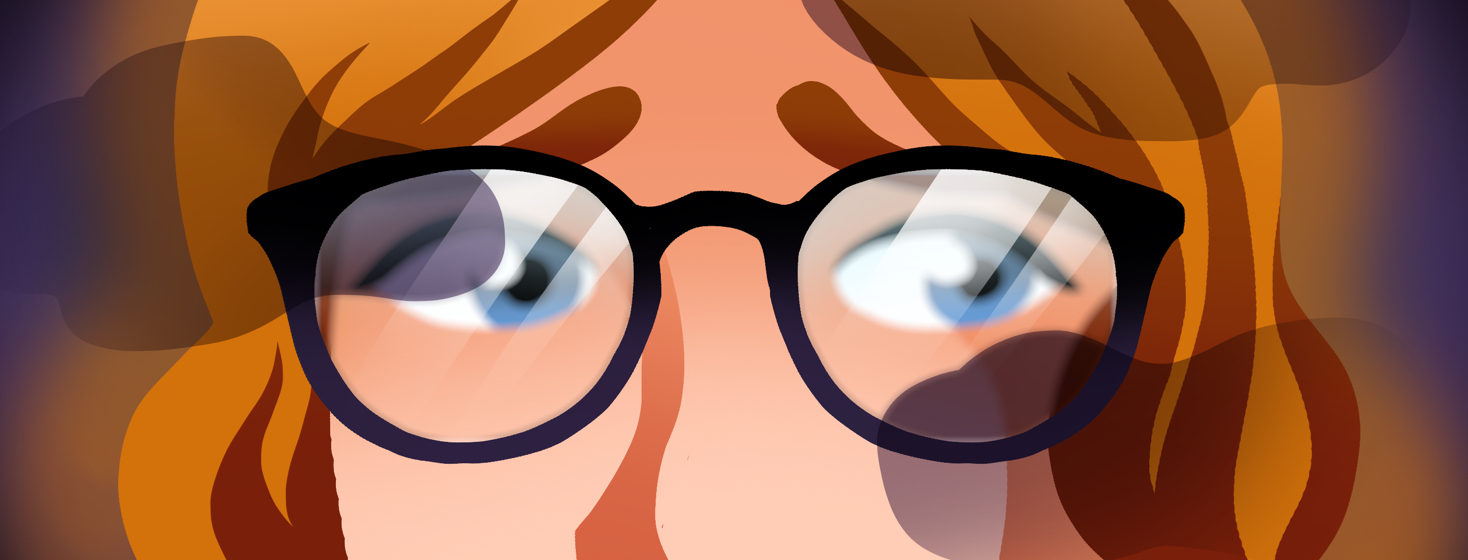
In the motel rooms, I was operating in mid to dim light during the night. There was always light coming in somewhere through the curtains or the bathroom windows. Sometimes the light from outside the motel had an orange hue, and it was then that I really noticed the gray, oval shapes that I could see on the walls, much more than I do at home.
In my controlled environment in my own bedroom, things are usually quite dark (when I can’t see anything on the walls) or quite light (when I also don’t see the ovals). Seeing these gray ovals was quite upsetting. And when the outside light was orange, the ovals on the walls were orange, too. I don’t even want to think about that at the moment! That’s a question for my retina specialist when I call him upon my return.
A smaller TV was impossible to watch
Watching television in bed is usually a treat when in a motel, and it's a good way to relax after a day’s driving. Wow, did I notice the difference! A 30-inch television on the counter was too far away for me to see from the bed. I couldn’t read the subtitles or the menus, and I couldn’t see to operate the remote. I cope well at home with my 75-inch television and didn’t realise how difficult a smaller version can be.
Seeing the time and setting a reminder to wake up in the morning was just that bit more fiddly without Alexa. She didn’t come along for the ride. I missed her!
Having a plan for next time
So now I have a plan. I’ll see the optometrist for some new driving glasses. Next, I’ll try some clip-on sunglasses in the amber color that people seem to find helpful. But the very first thing I’ll do is call my retina specialist about the grey/orange ovals!
I had a wonderful trip and I can’t complain. I’m very lucky to still be able to drive, and I’m grateful for that. I think one of the reasons I took this trip in the first place was to do it while I can.
It has made me cautious, though, because I now realise that things aren’t the same when I’m out of my comfort zone. Coping with unexpected challenges is part of the deal when you're trying to make the most of your life at any stage and with any type — wet, dry, geographic atrophy, or other.
Join the conversation